


As the temperatures drop, our heating systems work overtime. We want to make sure our homes stay warm and comfortable. This often means our HVAC units are put to the test. We’ve put together some common issues we see during winter and how we can handle them. Good winter HVAC maintenance can really make a difference in keeping things running smoothly. Let’s look at what we can do.
Key Takeaways
- Regularly checking and cleaning air filters helps our heating system work better and uses less energy.
- Frozen condensate lines can stop your AC from working, even in winter if it’s a heat pump. We can prevent this with simple checks.
- If your furnace isn’t lighting, it could be a few things, like the igniter or gas supply. Knowing these problems helps us fix them faster.
Ensuring Optimal Performance With Winter HVAC Maintenance
Winter is when our heating systems work the hardest. To keep things running smoothly and avoid unexpected breakdowns, a little bit of maintenance goes a long way. We want to make sure our homes stay warm and comfortable without any fuss. Taking proactive steps now can save us a lot of trouble later.
Preventing Frozen Condensate Lines
One issue we might run into, especially with high-efficiency furnaces, is a frozen condensate line. This line carries away moisture produced during the heating process. If it freezes, it can cause the furnace to shut down. We can prevent this by making sure the line is properly insulated, especially where it runs outside or through unheated areas. Sometimes, a simple drain pan heater can also do the trick.
- Check the condensate drain line for any blockages.
- Ensure the line is sloped correctly for proper drainage.
- Insulate exposed sections of the line, particularly those outdoors.
If we suspect a frozen line, we can try to gently thaw it with a hairdryer on a low setting. Never use an open flame.
Checking Air Filters For Efficient Airflow
Dirty air filters are a common culprit behind many HVAC problems. They restrict airflow, making the system work harder and less efficiently. This can lead to overheating, increased energy bills, and even damage to the furnace. We should check our air filters monthly and replace them as needed. The type of filter and how often we need to change it can depend on our home environment – pets, allergies, and general dust levels all play a part.
Here’s a quick guide:
- Locate your air filter. It’s usually near the return air duct or inside the furnace itself.
- Inspect the filter. Hold it up to a light. If you can’t see light through it, it’s time for a change.
- Replace the filter. Make sure to note the size and MERV rating. Install the new filter with the airflow arrow pointing in the correct direction.
Regularly changing air filters isn’t just about keeping the air clean; it’s a simple yet effective way to protect our heating system and keep it running at its best all winter long. It’s one of those small tasks that has a big impact on comfort and cost.
We should also keep the area around our outdoor unit clear of snow and ice. This helps with airflow and prevents potential damage. A little attention now means a warmer, more reliable winter for everyone.
Addressing Common Heating System Issues During Colder Months
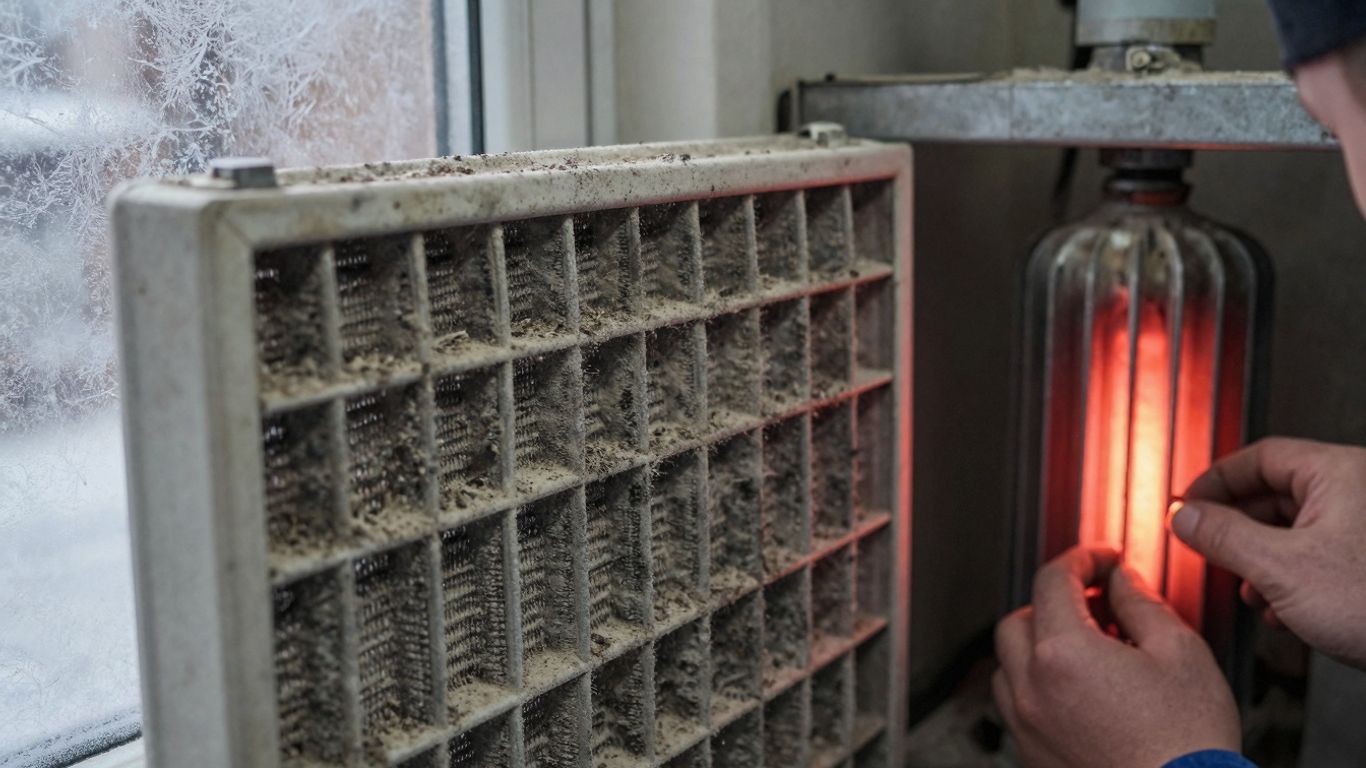
When the temperatures drop, our heating systems work overtime. Sometimes, this heavy use can lead to problems. We’ve put together some common issues we see and how we approach fixing them.
Troubleshooting Thermostat Malfunctions
The thermostat is the brain of your heating system. If it’s not working right, your house won’t be comfortable. We often find that simple things are the cause.
- Check the batteries: This sounds basic, but dead batteries are a frequent culprit. We always start here.
- Verify settings: Sometimes, the thermostat might have been accidentally switched to ‘cool’ or ‘off’. A quick check of the mode and temperature settings can save a lot of trouble.
- Look for damage: Physical damage to the thermostat or its wiring can prevent it from sending signals to the furnace.
- Reset the system: Like many electronics, a thermostat can sometimes benefit from a simple reset. We can guide you through this process.
A malfunctioning thermostat can make you think your entire heating system is broken when it’s just a small fix.
Identifying And Resolving Furnace Ignition Problems
No heat? The furnace might be struggling to ignite. This is a more serious issue, but we can usually pinpoint the cause.
- Pilot light issues: Older furnaces have a pilot light that needs to stay lit. If it goes out, the furnace won’t heat. We check if the pilot light is on and if the thermocouple (the part that senses the pilot light) is working correctly.
- Igniter failure: Modern furnaces use electronic igniters. If this part is dirty, cracked, or simply worn out, it won’t produce the spark needed to light the gas.
- Gas supply problems: We need to make sure the gas valve is open and that there’s adequate gas pressure reaching the furnace.
- Flame sensor issues: Once the burner ignites, a flame sensor confirms the flame is present. If this sensor is dirty or faulty, it can shut down the furnace as a safety measure.
When we encounter ignition problems, our first step is always to ensure the safety of the system. We check for gas leaks and make sure all safety components are functioning as they should before attempting any repairs.
We understand how disruptive a heating issue can be, especially in the cold. Our goal is to get your system back up and running efficiently and safely.
Wrapping Up Winter HVAC Care
So, we’ve gone over some of the common issues that can pop up with our heating systems when the cold really sets in. It’s easy to forget about the furnace until it’s not working, right? We’ve talked about things like strange noises, weak airflow, and pilot lights going out. The good news is, many of these problems aren’t the end of the world. A little bit of regular upkeep, like changing filters and checking vents, can go a long way in preventing bigger headaches. And if you do run into trouble, knowing what to look for can help you explain the situation to a technician. We hope this helps you keep your home warm and comfortable all winter long. Don’t hesitate to call a pro if you’re unsure about anything – that’s what they’re there for.
Frequently Asked Questions
When should we schedule our HVAC system check-up before winter arrives?
It’s best to get your heating system looked at by a professional in the early fall, ideally September or October. This gives us plenty of time to catch any small issues before the really cold weather hits and we need our heaters working non-stop.
What are the signs that our furnace might be having trouble starting up?
We might notice a few things if the furnace is struggling to ignite. Sometimes, you’ll hear it trying to start, maybe a clicking sound, but then nothing happens. Other times, the heating might come on for a bit and then shut off unexpectedly. If your home isn’t getting warm like it should, that’s also a big clue.
How often should we be changing the air filters in our heating system?
We generally recommend checking and changing your air filters every one to three months. If we have pets or if someone in our home has allergies, we might need to change them even more often. Clean filters mean our system can breathe easily and heat our home more efficiently.
